Quartz
Adds fine aggregate, color depth, and a refined texture while staying relatively smooth underfoot.
POOL FINISHES
Quartz pool plaster gives Murrieta and Riverside homeowners a clean, refined look with more color, texture, and durability than standard white plaster.
Quartz Pool Plaster & Finish Installation for homeowners in Riverside County and the Inland Empire, including Riverside, Murrieta, Temecula, Fallbrook.
Faded plaster, small surface imperfections, and outdated color can make an otherwise healthy pool look worn out. Quartz aggregate is a practical upgrade when you want a smoother visual texture without the heavier look of larger pebble.
We inspect and prepare the pool shell, compare quartz with plaster and pebble for the way you use the pool, then apply and balance the selected surface for a clean, long-lasting finish.
Quartz is an upgrade to a cement-based plaster matrix, not a waterproof paint. The evaluation still needs to identify hollow material, cracks, weak patches, stains, scale, fittings, and shell conditions that determine preparation.
The fine aggregate usually feels smoother than larger pebble, but blend, exposure, workmanship, and the condition of steps and benches affect comfort. Homeowners should compare actual texture, not assume every quartz finish feels identical.
Color and mottling are influenced by pigments, troweling, fill water, curing, brushing, and chemistry. We discuss natural variation before installation and plan startup to reduce preventable scale, streaking, and uneven hydration.
Quartz can be the right middle choice when classic plaster feels too plain and pebble feels too textured. It should still be compared against expected service life, budget, water color, hard-water maintenance, and surrounding materials.
The best comparison is not simply smooth versus rough. A homeowner should weigh how much visual variation is desired, how the finish will feel on steps and benches, how often hard water is managed, and whether the surrounding tile and coping support the chosen color.
Adds fine aggregate, color depth, and a refined texture while staying relatively smooth underfoot.
The smoothest and most economical finish direction, but it generally shows wear sooner under difficult chemistry and heavy use.
Uses larger exposed aggregate for a more natural, tactile surface and stronger visual variation.
Most quartz resurfacing work takes about 5–7 business days from drain to refill. The final schedule depends on repairs and related masonry.
DOCUMENTED RIVERA POOLS PROJECT
Rivera Pools' documented Temecula case used StoneScapes rather than quartz, which makes it useful as a transparent comparison project. Its before-and-after record shows the same preparation and coordination questions a homeowner should resolve before choosing either aggregate system.
The existing pool had cracked plaster, fading coping, and outdated equipment. Choosing a finish could not happen responsibly until the structural, edge, and operating conditions were considered together.
The recorded scope combined structural remodeling, premium aggregate resurfacing, modern glass tile, natural stone, and a Pentair smart pump over two weeks. Quartz would offer a finer texture, but it would require the same disciplined preparation and startup.
What this project demonstrates: Material choice changes feel and appearance; it does not eliminate substrate work. Homeowners comparing quartz with pebble should expect both proposals to explain removal, repairs, transitions, fill, and startup in equal detail.
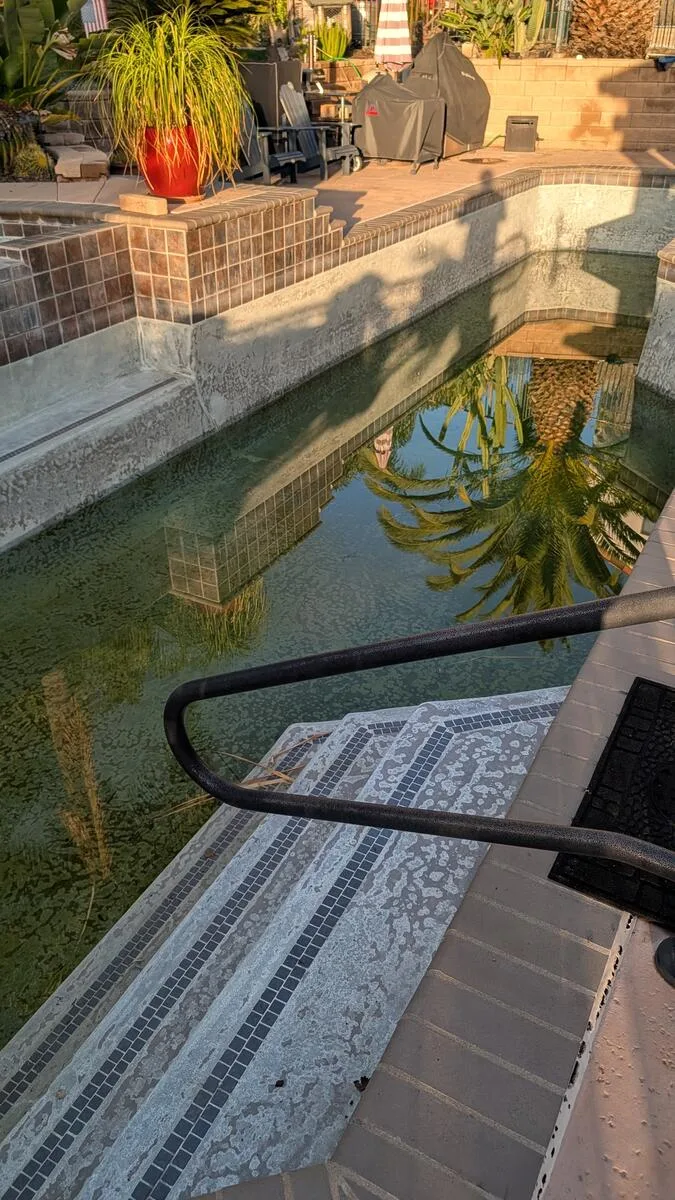
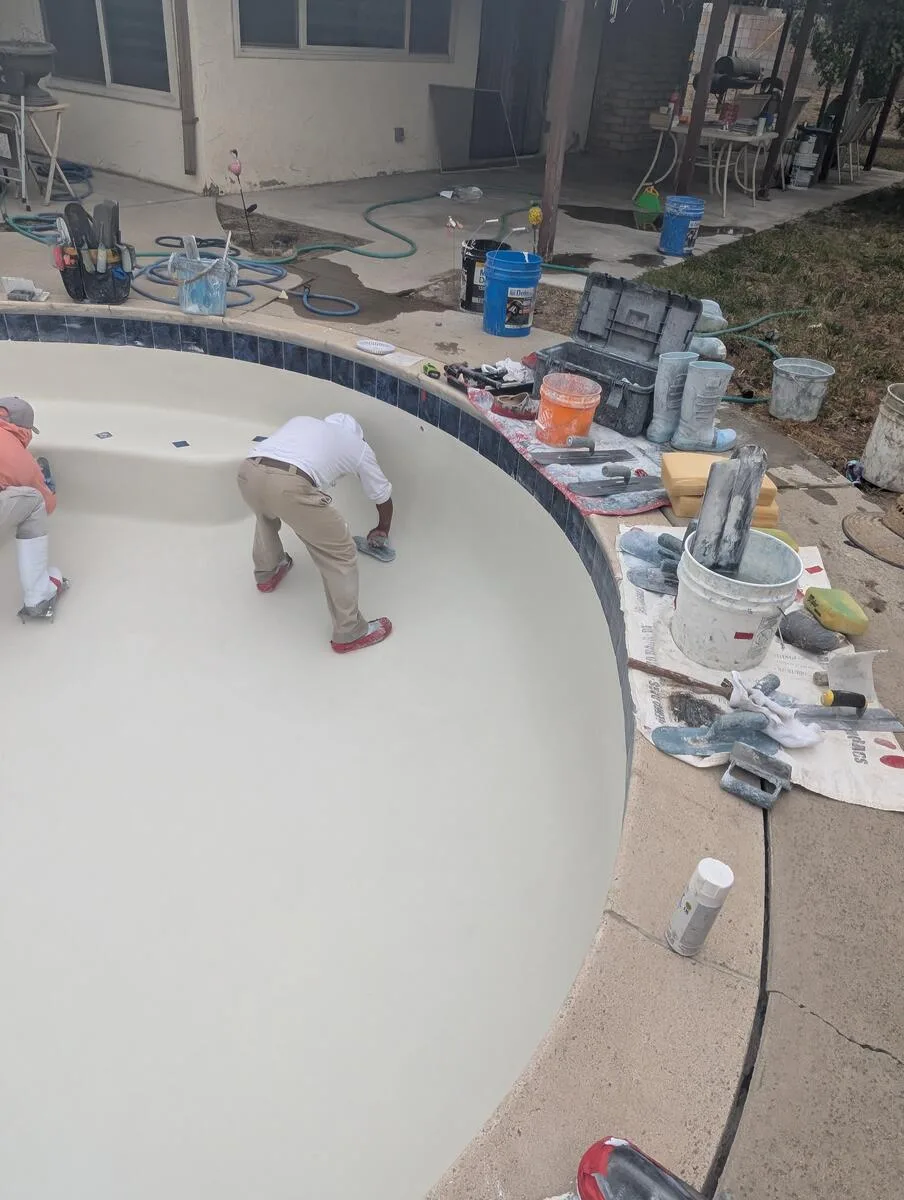
These photos show completed Rivera Pools work and before-and-after renovation details. They are representative project examples, not city-specific case studies.
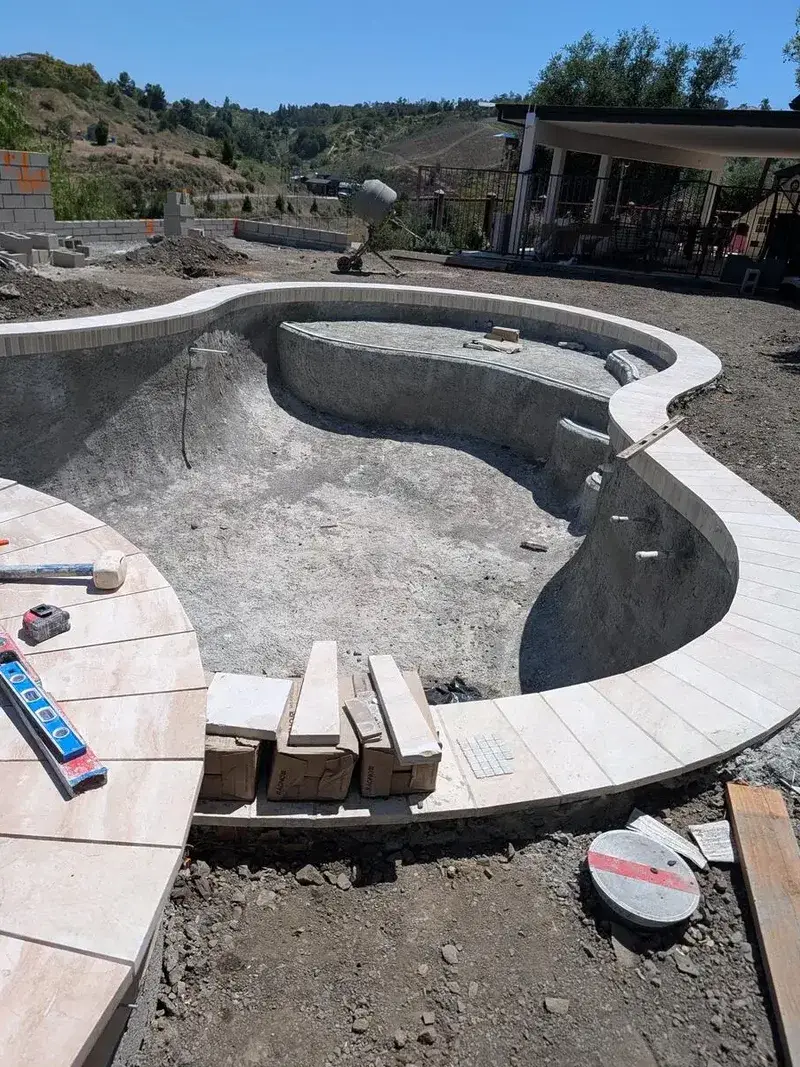
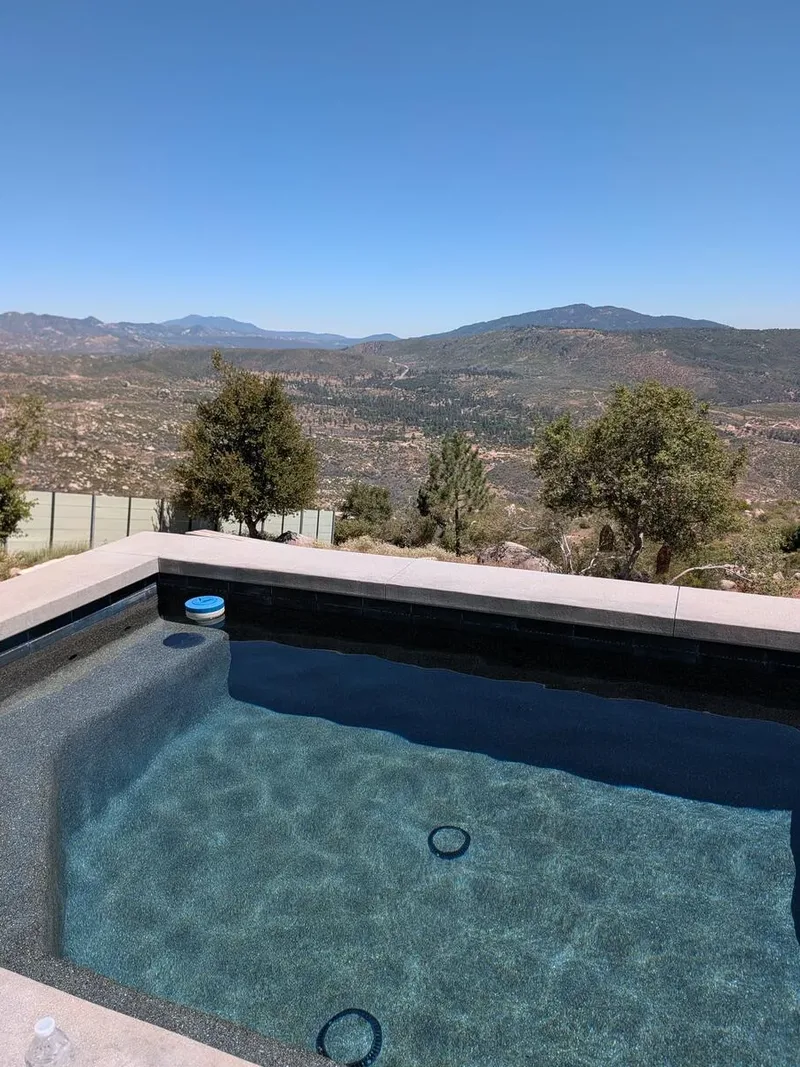
With proper water chemistry, a quartz finish commonly lasts 10–15 years. Pool conditions, sun exposure, and maintenance affect its service life.
Yes. Quartz aggregate is generally finer and smoother underfoot than pebble while providing more texture and visual depth than standard plaster.
Yes. We evaluate the pool shell, access, waterline tile, and surrounding materials before recommending a quartz finish for a Murrieta, Riverside, or nearby pool.
Riverside, Murrieta, Temecula, Fallbrook, Bonsall, Vista
Quartz pool plaster in MurrietaQuartz pool finish in RiversideQuartz pool finish in Temecula
Pebble Pool Finish & Resurfacing · Diamond Brite Pool Finish Installation · Travertine Pool Coping Installation · Pool Plaster Delaminating · Rough Pool Plaster Repair · Baja Shelf Addition Cost · Pool Resurfacing & Replastering · Pool Remodeling & Renovation · StoneScapes Pool Finishes · Pool Leak Detection & Repair · Pool Equipment Upgrades & Automation
Tell us about your pool and the service you need.
Call (951) 345-9276 — We will show how each finish changes texture, color, maintenance, and the overall renovation scope for your pool.